playbook
Organisational Change Management: 7 Lessons for CEOs and CHROs
Most change programmes break in the same places. Leaders hear too late, managers receive facts without language, employees who stay receive too little support, and the executives carrying confidential information have nowhere to process it.
By Talent Crunch - Berlin · 2026-09-04
Organisational change management: seven lessons for CEOs and CHROs
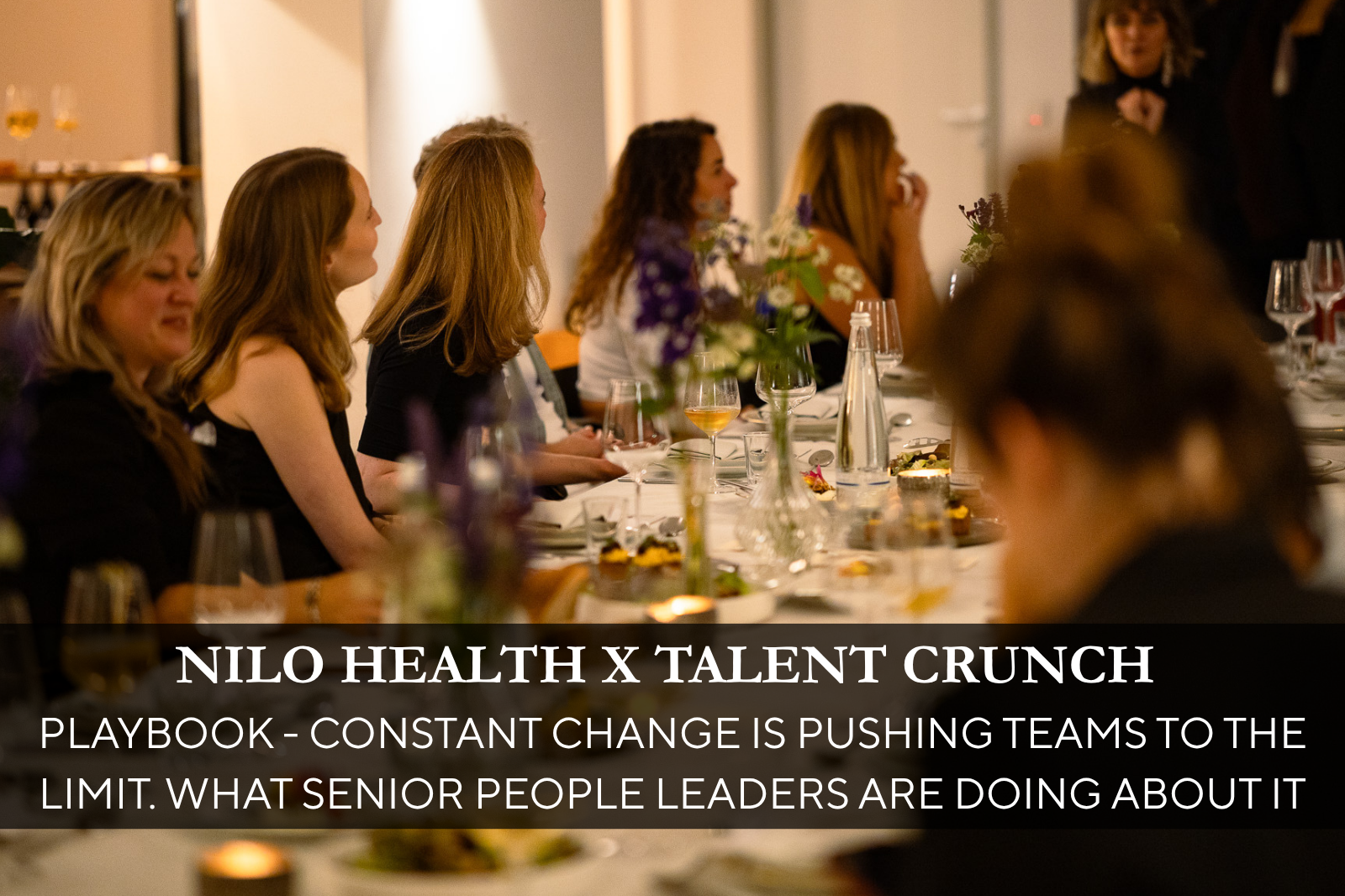
What senior People leaders shared at a Talent Crunch and Nilo leadership dinner in Berlin, September 2026
Most organisations plan announcements. Far fewer prepare the people delivering it, support those who remain, or track what happens next.
At an invite-only Talent Crunch and Nilo dinner, senior Talent and People leaders compared their experience of restructuring, mergers, scaling, market closures and business transformation. Their message was clear: organisational change fails when leaders treat it as a communication event rather than an operating challenge.
1. Treat change as a category, not a single event
“Change management” often becomes shorthand for layoffs. The leaders described a wider set of situations:
Downsizing and restructuring
Mergers and acquisitions
Private equity integration cycles
Changes to strategy, operating model and culture
Rapid scaling, where informal ways of working stop functioning
Long periods of uncertainty before a decision is made
Each creates a different risk.
Rapid growth creates friction around processes. Mergers threaten identity and retention. Prolonged uncertainty leaves people facing expectations without clarity. CEOs and CHROs must first name the type of change.
Before deciding how to respond, identify what employees are losing: certainty, autonomy, status, relationships, competence or trust. Different losses require different responses. A town hall addresses missing information. It does little for a manager whose authority disappeared or an employee whose role no longer resembles the one they accepted.
2. Tell leaders early enough to process the news
Leadership teams often hear about a major change only days before their employees. They then need to explain it before processing it themselves.
Several participants argued for briefing senior leaders one to two weeks before a wider announcement, where legal and works council processes permit it. A leader who has barely absorbed the news is poorly placed to guide others.
A practical sequence:
Brief the most senior leaders first
Involve People leaders once the change becomes likely
Separate confirmed facts, likely outcomes and open questions
Use confidentiality agreements where needed
Include legal and works council duties
Some participants accepted a greater leak risk in exchange for prepared leadership. Early involvement also strengthened ownership of confidentiality.
Early communication does not mean sharing every detail with everyone. It means matching information to responsibility:
Talent leaders need enough warning to pause hiring
People Partners need time to prepare managers
Operational HR needs confirmed decisions to execute safely

3. Give managers the words, not only the facts
Information moves down an organisation but somehow, the narrative often does not.
Without an agreed explanation, every manager produces a different version. First-time managers face the greatest pressure because many have never delivered difficult news.
Before the cascade begins, the executive team should agree on five points:
What is changing?
Why is it changing?
What is not changing?
What is confirmed, and what is still undecided?
Where should unanswered questions go?
Two practices worked well:
Collect anonymous questions before a town hall, then prepare leaders around genuine concerns.
Run separate question sessions where middle managers raise issues they were unable to answer.
Managers also need permission to say, “I don’t know yet.” Give them a short message pack containing the agreed narrative, an FAQ, phrases to avoid, an escalation route and the date of the next update. Rehearse difficult questions before the town hall. Consistency comes from preparation, not from forwarding a slide deck.
The group disagreed on how much financial detail to share. They agreed on this: false certainty damages trust. State what is known, unknown and due next.

4. Measure whether people are struggling
Track the effect of change against the organisation’s own baseline. Headline numbers give too little context.
Useful signals include:
Repeated or long-term absence within a team
Regrettable attrition during the following 12 months
Falling engagement scores
Previously strong performers showing a sustained decline
Repeated questions, slower decisions or withdrawal
Strong performers often start searching quietly, leaving the organisation smaller and less capable. A performance drop from someone with a strong record should first prompt a question about the environment, not an immediate judgement.
Treat these signals as a pattern, not proof in isolation. Sick leave might reflect flu season. Attrition might reflect market demand. Engagement scores might reflect poor measurement.
Look for several indicators moving together, compare affected teams with their own history, and review differences by manager, function, tenure and location.
5. Support three groups, not two
Most plans focus on people leaving. Better plans support those who stay. Almost none provide structured support for the leaders carrying the change.
Those leaders often hold sensitive information for months while colleagues ask direct questions. They need a confidential space with experienced peers.
The roundtable identified useful support for all three groups:
Leavers: practical support which extends beyond the final working day
Employees who stay: career conversations, clear expectations and support for delayed emotional responses
Leaders: confidential peer support, individual People Partner check-ins and space to process before leading others
Informal time together also mattered. Social evenings and visible CEO participation helped rebuild relationships. A farewell message on Slack was never enough on its own.
6. Allow time to process, then reset expectations
Participants viewed three to six months as a reasonable processing period, depending on the impact. Afterwards, leaders need an honest reset on expectations, roles and whether each employee wishes to continue.
Tone matters: a transparent reset gives people agency, an ultimatum creates another reason to leave.
A processing window is not a period of silence.
Set milestones inside it, such as 30-day role clarification, a 60-day workload review and a 90-day career conversation. This separates normal adjustment from unresolved structural problems and gives employees evidence that leadership is still paying attention.
7. Use a change framework, even without a change manager
Few organisations at the dinner employed a dedicated change manager. Elsewhere, responsibility often sits with a Chief of Staff, senior People leader or COO.
The absence of a dedicated role does not remove the need for a plan. Document:
The stages of the change
Decision owners and approval points
Who joins at each stage
The communication sequence
Support for leavers, employees and leaders
Measures to review after three, six and 12 months
The plan exposes missing steps early and gives leaders a shared reference point.
A change manager does not make the business decisions. They turn those decisions into a sequence people understand, track dependencies, identify affected groups, prepare communication and measure adoption. Without clear ownership, tasks scatter across Legal, Communications, Operations and People. The gaps appear between those functions.
The question every CEO and CHRO should ask
Many executives have never led a restructuring, market closure, merger or founder exit. Leaders below them have even less access to experienced operators.
Ask: who does each leader call when they face a decision they have never made before?
The strongest support comes from someone who has led a similar organisation and made comparable decisions. Participants found it through direct introductions and investor platform teams.
Change management does not end with the announcement. Its results depend on the leaders carrying the message, the managers translating it and the people living with the consequences.
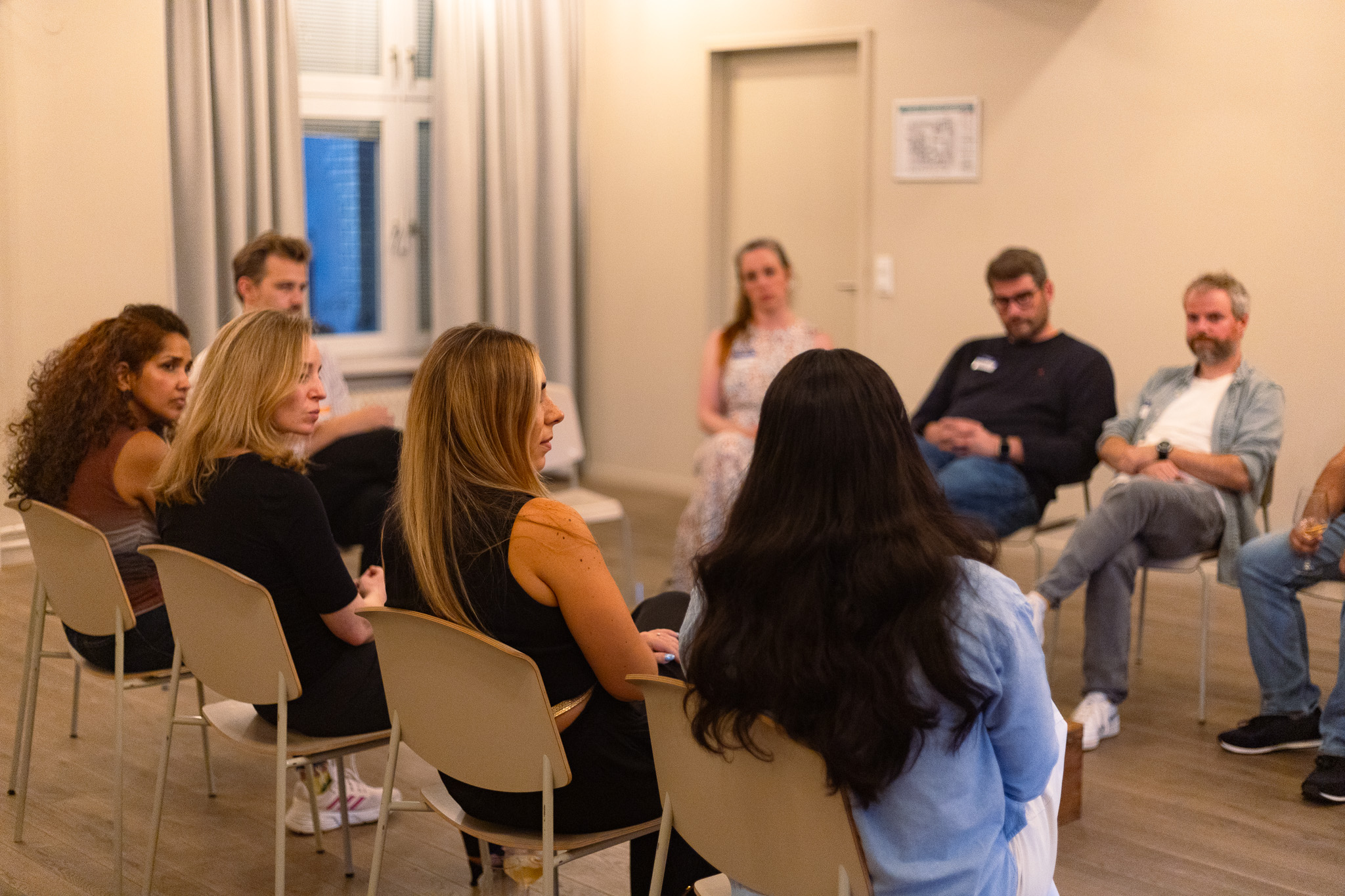
This roundtable was part of an invite-only leadership dinner for senior Talent and People leaders at scaling and enterprise organisations in Germany. The evening was sponsored by Nilo and hosted by Talent Crunch Berlin.
If you are a senior leader interested in joining a future dinner, email info@talent-crunch.com.
🔗 Stay in the loop with Talent Crunch.
Frequently asked questions
What is the biggest organisational change management risk?
Unprepared leadership. Managers who receive facts without time, context or agreed language produce inconsistent messages and weaken trust.
When should leaders hear about organisational change?
They should hear early enough to process the news and prepare their teams, subject to confidentiality, legal duties and works council requirements.
What should companies measure after a major change?
Track regrettable attrition, absence against team baselines, engagement, sustained performance shifts and recurring employee concerns for at least 12 months.
#change #change management #hr #layoffs #ai